

No one applauds a finished crossword

and it may be the most important thing you do all week.

Somewhere along the way, we started treating hobbies like startups.
Paint? Monetise it.
Bake? Launch a brand.
Run? Track, optimize, compete, post.
In a culture obsessed with productivity and visibility, even leisure risks becoming performance.
But not everything in life is meant to grow, scale, or generate value.
Some activities exist for a quieter, more essential purpose: to keep us grounded, regulated, and human.
These hobbies don’t build an audience. They build equilibrium.
The Pressure to Perform Our Free Time
Modern life subtly pushes us to convert joy into output.
Social media rewards polished results, hustle culture glorifies efficiency, and productivity frameworks seep into personal life.
The result? Even rest can feel like a task.
When hobbies become measurable achievements, they stop functioning as recovery. Instead of relieving stress, they introduce new expectations: improvement, consistency, shareability, and growth.
But restoration thrives in spaces free from evaluation.
A hobby meant to keep us sane is one where no one is watching, scoring, or waiting for results.
Creative Hobbies Without an Audience
Creative expression is one of the fastest ways to quiet the analytical brain.
But the benefit appears only when creativity is detached from judgment.
Coloring in a book.
Journaling messy thoughts no one will read.
Knitting something uneven.
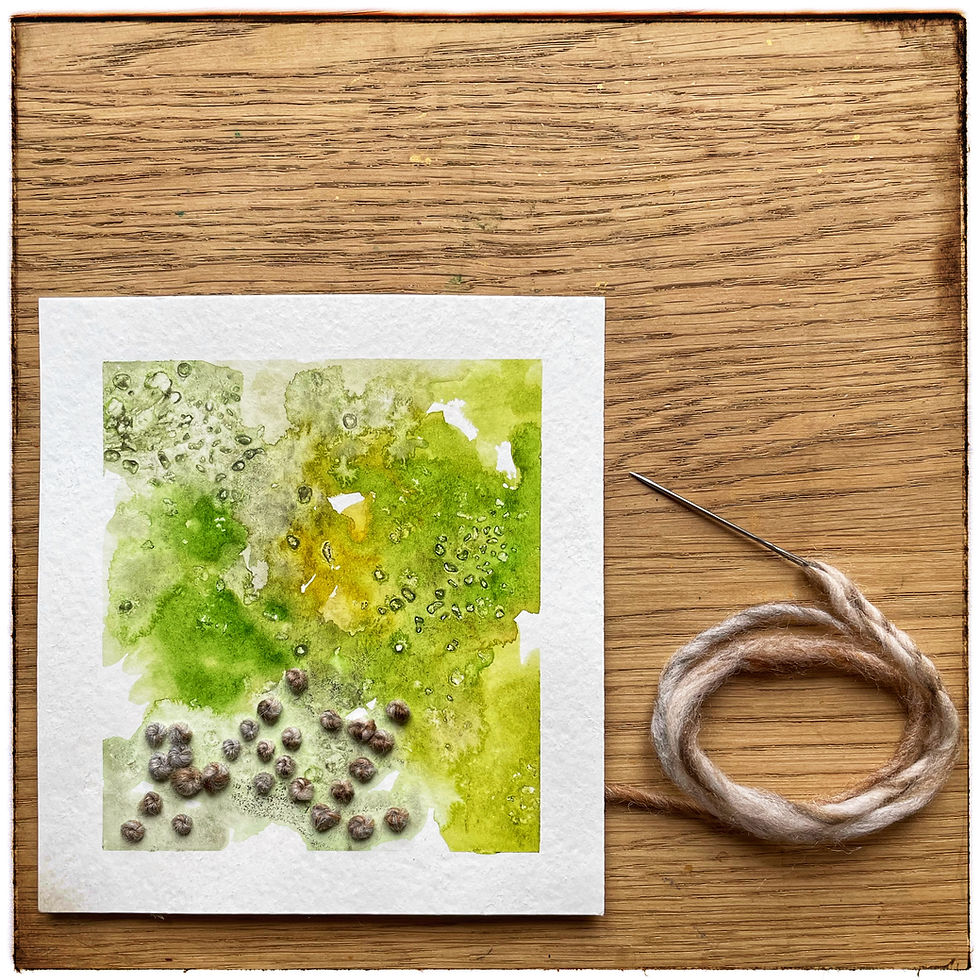
Painting for the rhythm of brushstrokes, not the outcome.
The goal isn’t mastery — it’s absorption.
Psychologically, these activities induce a state of gentle focus that calms the nervous system. The brain shifts away from rumination and toward tactile engagement, reducing stress responses and restoring cognitive balance.
The moment you worry whether it’s “good,” the therapeutic effect weakens.
Permission to be imperfect is the point.
Slow Hobbies in a Fast World
We live at notification speed. Slow hobbies reintroduce human time.
Gardening teaches patience and cyclical thinking.
Puzzles reward persistence and sustained attention.
Reading physical books deepens concentration.
Building LEGO sets invites structured calm and tactile satisfaction.
These activities resist acceleration. They cannot be rushed without losing their essence.
Research on attention restoration shows that slow, repetitive tasks help reduce mental fatigue and restore cognitive clarity. In simpler terms: slowness soothes the brain.
No one applauds finishing a puzzle.
Yet afterward, the mind feels quieter and less fragmented.
That quiet is the reward.
Movement Without Metrics
Physical activity often becomes another performance arena. Metrics, tracking apps, and goals can motivate — but they can also transform movement into pressure.
Movement for regulation looks different:
walking with no destination,
cycling without tracking speed,
stretching because your body asked,
dancing alone in your living room.
When movement stops being about optimization, it becomes communication.
Instead of pushing the body, you begin listening to it.
This shift reduces cortisol levels, improves mood, and reconnects physical awareness with emotional regulation.
Movement becomes care, not competition.
Why Non-Scalable Hobbies Matter
Hobbies that exist outside performance culture offer unique psychological benefits:
reduce stress without introducing new pressure
protect identity from becoming purely productive
create private space in a public world
anchor daily life with moments of stability
reinforce intrinsic motivation and self-connection
Perhaps most importantly, they remind us that our worth is not tied to output.
In a results-driven culture, choosing something purposeless can feel quietly rebellious.
And deeply restorative.
Protecting Something That Is Only Yours
If everything you do is visible, measurable, or monetizable, it becomes harder to hear yourself think.
Private joys act as emotional insulation.
They give you a space where you are not evaluated, compared, or consumed.
That space is not indulgent. It is protective.
It keeps burnout at bay.
It preserves curiosity.
It allows you to exist without performing.
A Gentle Question to End With
What is one thing you do that nobody tracks, nobody applauds, and nobody expects you to improve at — yet it leaves you feeling calmer, clearer, more like yourself?
That’s not wasted time.
That’s maintenance for being human.
And it may be the most important thing you do all week.


Comments